VLT, TSER, IRR, SHGC, U-factor, emissivity, glare reduction. Every one of those numbers means something specific, and a couple of them are routinely used to make mediocre film look extraordinary.
Every film a reputable manufacturer sells has a published spec sheet. Most customers never see one, which is unfortunate, because the spec sheet is where the marketing stops and the physics starts.
Here's every number you'll find on one, what it actually measures, and which ones deserve your attention.
VLT — Visible Light Transmittance
What it measures: The percentage of visible light that passes through. A 70% film lets 70% through; a 20% film lets 20% through.
What it does not measure: Heat. This is the single most persistent misconception in the industry, and it costs people real money.
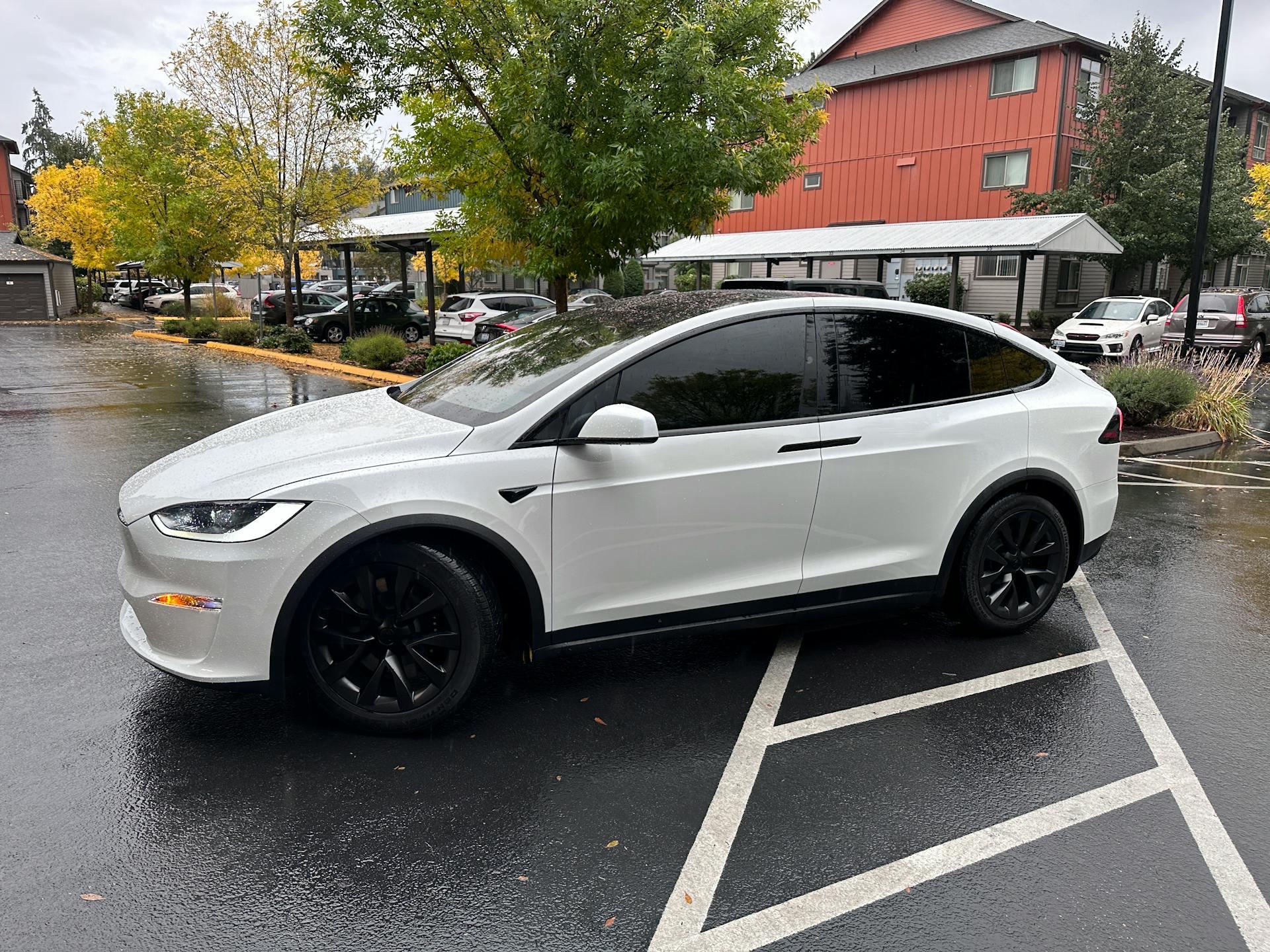
Two things worth knowing. First, in the trade, "35% tint" refers to the film's VLT, but what a police officer's meter reads is the total transmittance of glass plus film, which is always lower. That distinction is the whole basis of Oregon's two-part tint statute. Second, VLT is a visible-light measurement only — it tells you exactly nothing about infrared.
TSER — Total Solar Energy Rejected
What it measures: The percentage of total incoming solar energy — ultraviolet, visible, and infrared combined — that the film keeps out.
This is the number that matters for comfort. If you take one thing from this article, take that sentence. TSER is comprehensive, it's standardized, and it's the only figure that lets you honestly compare a light ceramic against a dark dyed film.
Higher is better. Anything above 50% is genuinely strong performance for automotive film.
IRR — Infrared Rejection
What it measures: The percentage of infrared energy rejected — sometimes across the full IR band, and sometimes at one cherry-picked wavelength.
Where it goes wrong: Sunlight is roughly 3–5% ultraviolet, ~44% visible light, and ~52% infrared. That ceiling has an unavoidable consequence:
A film that rejected 100% of all infrared and touched nothing else would have a TSER of about 52%. So when an ad pairs "99% IR rejection" with the suggestion that a window will stay near-ambient, the arithmetic does not support it.
IRR isn't a useless number — it tells you something real about the film's selectivity. But an IRR figure quoted without a TSER figure is a choice, and it's usually a deliberate one. Ask for both.
UV Rejection
What it measures: The percentage of ultraviolet radiation blocked.
Why it's rarely a differentiator: Essentially all quality window film blocks 99%+ of UV, cheap dyed film included, because the polyester substrate and UV inhibitors do most of that work. It's a genuine and important benefit — it's just not a reason to choose one quality film over another.
The bar worth knowing: to carry the Skin Cancer Foundation's Seal of Recommendation, a film must demonstrate that it blocks 99% or more of UVA and UVB. If UV protection is your primary motivation, look for that seal rather than a marketing percentage. More on why this matters in our article on UV and window film.
Glare Reduction
What it measures: The reduction in visible light relative to untreated glass — effectively derived from VLT.
What it's good for: It's a real quality-of-life spec, especially for west-facing rooms, computer work, and the low-angle winter sun that makes I-5 miserable at 4 p.m. Just understand it's a restatement of darkness, not an independent performance dimension.
The residential and commercial numbers
Architectural film spec sheets carry a few extra figures that automotive sheets don't. These come from the building-science world and they're worth understanding if you're filming a house or an office.
SHGC — Solar Heat Gain Coefficient
The fraction of solar heat that gets through the glazing, expressed 0 to 1. Unlike everything else here, lower is better. An SHGC of 0.30 means 30% of solar heat comes through.
You'll often see it quoted for the glass-plus-film system rather than the film alone, which is the more useful form. If you're comparing film against a window-replacement quote, SHGC is the number that lets you compare them on equal footing.
U-Factor
The rate of heat conduction through the assembly — how fast heat escapes on a cold night. Lower is better.
Most solar-control film barely moves U-factor. Low-emissivity (low-E) film is the exception: it's specifically designed to reduce radiant heat loss and is the right product if your problem is a cold room in January rather than a hot room in July. These are genuinely different products solving genuinely different problems, and buying the wrong one is a common and expensive mistake.
Emissivity
How readily a surface radiates heat. Low-E films push emissivity down, which is the mechanism behind their winter benefit.
Visible Light Reflectance — Interior and Exterior
Two separate numbers, and both matter.
Exterior reflectance is what your neighbors and passing officers see, and it's legally capped in Oregon at 13% for vehicles. Interior reflectance is what you see: high interior reflectance produces a mirror effect at night, where you see your living room reflected back instead of the yard. Highly reflective films look dramatic in daylight and can be genuinely unpleasant after dark. Ask about the interior number before you commit.
The cheat sheet
| Spec | Direction | What it really tells you |
|---|---|---|
| VLT | Lower = darker | Appearance and legal compliance. Not heat. |
| TSER | Higher = better | Overall heat performance. The one to compare. |
| IRR | Higher = better | Selectivity. Meaningless without TSER alongside it. |
| UV Rejection | Higher = better | Fade and skin protection. Look for 99%+ / SCF seal. |
| Glare Reduction | Higher = more | Eye comfort. Derived from VLT. |
| SHGC | Lower = better | Solar heat gain, architectural. 0 to 1 scale. |
| U-Factor | Lower = better | Winter heat loss. Only low-E film moves this. |
| Interior reflectance | Lower = less mirror | Night-time mirror effect indoors. |
Four questions that get you a straight answer
- "What's the TSER on this specific film at this specific VLT?" Specificity matters — product lines span a wide range.
- "Can I see the manufacturer's spec sheet?" A real shop has these or can pull them in thirty seconds.
- "Is the IR number full-spectrum or single-wavelength?" The answer, and how comfortable they are giving it, is informative.
- "What does the warranty cover, and who honors it?" Manufacturer-backed beats shop-backed, because shops close.
None of these are hostile questions. Anyone who installs good film is glad to be asked, because the spec sheet is where good film wins.
If you'd like someone to walk you through the actual sheets for the films we carry, come by the shop in Roseburg or request a free estimate. We'd rather you understand what you're buying than just take our word for it.
Get a straight answer for your vehicle or building
Free estimates in Roseburg and throughout Southern Oregon, plus free pickup and delivery on automotive work.
Request a Free Estimate